
Sellers and listings
Sellers and listings: reading badges as evidence before you order
A badge says what a seller is willing to promise. Read together with the rest of the listing, it is decent evidence about who you are buying from.
Seller trust from hearts, badges and store history
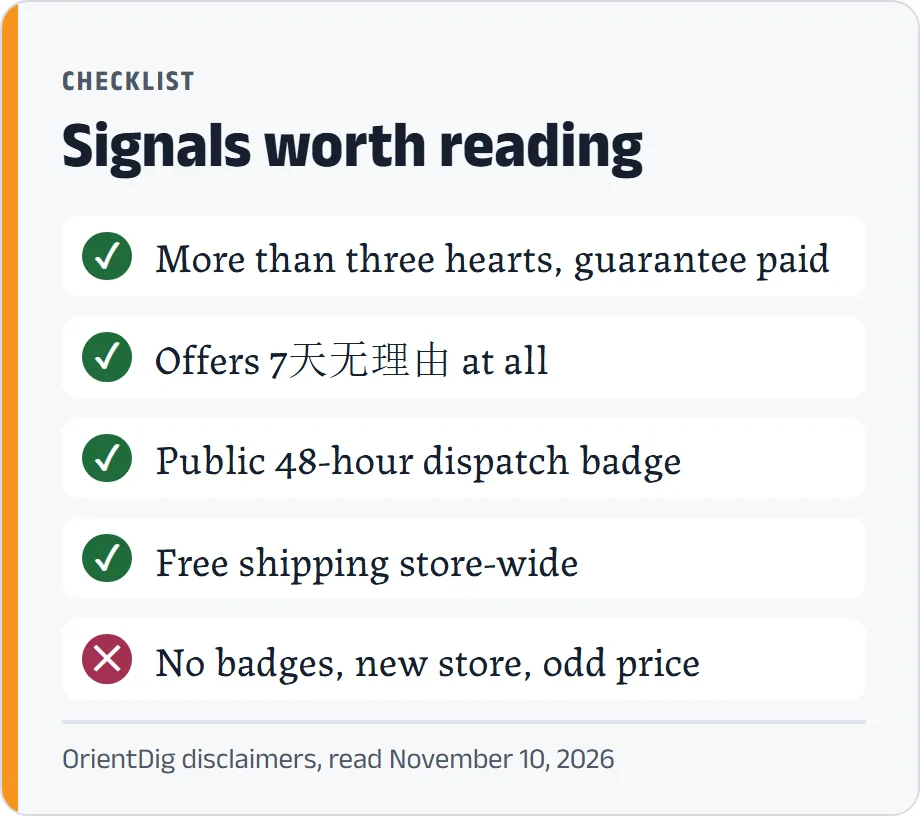
For choosing a seller, OrientDig publishes a single piece of advice in its disclaimers: prefer stores rated "more than three hearts" that pay into Taobao's guarantee, since a low-credit seller risks "false delivery, not delivery, no after-sale service", with the buyer carrying any loss. Hearts are the first tier of Taobao's seller levels; a store past them has a trading history.
Badges add to that picture. A seller who offers 7天无理由 has accepted returns in principle, even though OrientDig's window is shorter. A 48-hour dispatch badge is a commitment the seller has made in public. Consistent 包邮 across a store suggests a seller used to shipping volume. None of these prove quality, but a store with no badges, a new account and a price far below similar listings is the pattern OrientDig's disclaimer warns about.
Listing details that outrank any badge
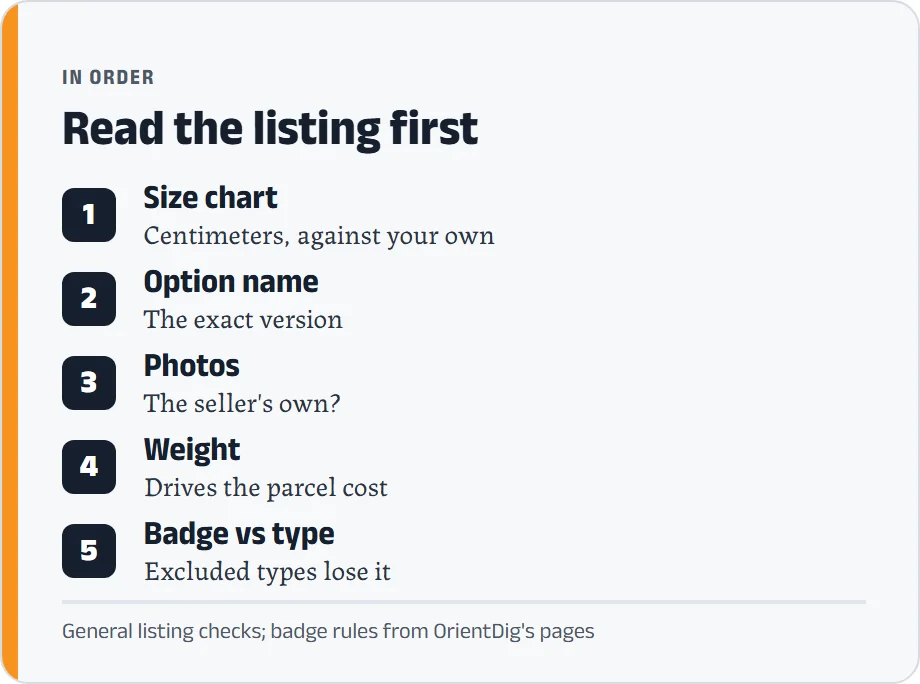
Judging a listing before paying rests on details no badge mentions. The size chart, in centimeters, matched against a garment you own. The exact option name you select, since sellers often sell several versions under one photo. Whether the photos look like the seller's own or like a brand campaign. The weight, which decides most of your parcel cost. And the material line, which is often more honest than the title.
Then check the badge line against the item type. A 7-day tag on underwear, food or a custom piece does not survive OrientDig's exclusion list. A 48-hour tag on a 预售 listing describes the period after the pre-sale date. A 现货 tag on the one size you want is a question for the purchaser, not an answer.
Five traps hiding behind friendly badges
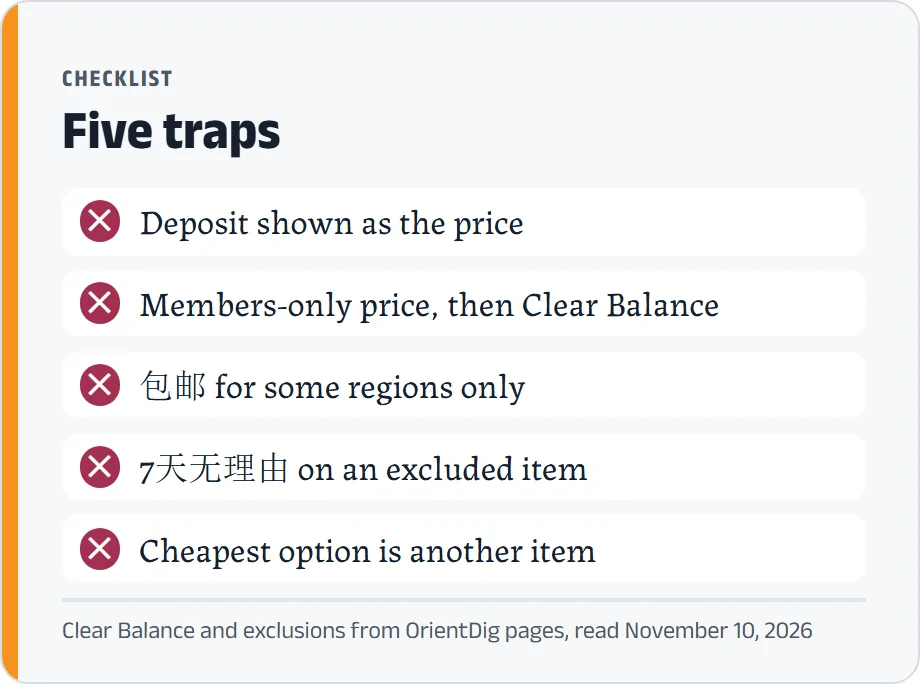
Before you pay, look for these. A big price in red that is actually a 定金, with the real total in smaller print. A membership price that only some buyers get; if the real purchase cost lands above your payment, the order moves to Clear Balance and you are asked for the difference. 包邮 that excludes some regions, which matters less for Shenzhen than for an address far inland but is worth confirming on OrientDig's own freight box.
Two more catch first-time buyers. A 7天无理由 badge on a second-hand or custom item, which OrientDig's terms exclude whatever the listing says. And a single listing bundling sizes or colors as separate products with one photo, where the cheapest option is a different item. Read the option list in full before choosing.
An order note a purchaser can actually use
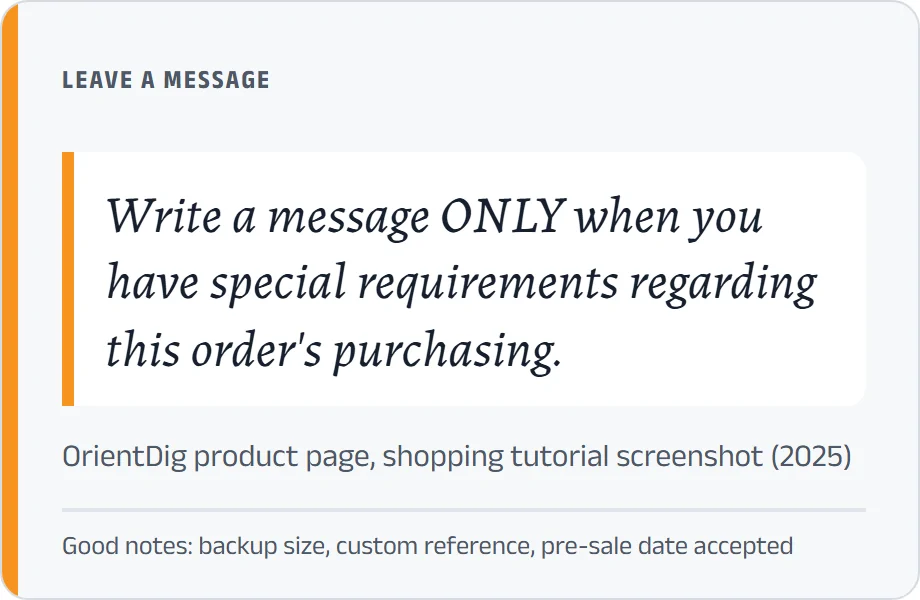
OrientDig's product page carries a message box, and the tutorial screenshot shows the line printed inside it, telling you to use it for special purchasing requirements only. Use it for things a purchaser can act on: a backup size if your first choice is out, the reference of a custom agreement you made with the seller, or a reminder that the listing is 预售 and you accept the seller's date.
Keep it to one or two short sentences and name the option exactly as the listing does. A note asking the purchaser to check quality or authenticity cannot be acted on; OrientDig's inspection scope does not include it.